.
Beside this, what are all electrical phenomena caused by?
Electrical phenomena are commonplace and unusual events that can be observed and that illuminate the principles of the physics of electricity and are explained by them. Electrical phenomena are a somewhat arbitrary division of electromagnetic phenomena.
Furthermore, what does an electric field do? Electric field is defined as the electric force per unit charge. The direction of the field is taken to be the direction of the force it would exert on a positive test charge. The electric field is radially outward from a positive charge and radially in toward a negative point charge.
One may also ask, how do you describe electricity?
A current of electricity is a steady flow of electrons. When electrons move from one place to another, round a circuit, they carry electrical energy from place to place like marching ants carrying leaves. Instead of carrying leaves, electrons carry a tiny amount of electric charge.
What are the two types of electrostatic forces?
Electric forces are very large, far greater than the force of gravity. Unlike gravity, there are two types of electric charge, (whereas there is only one type of gravity; gravity only attracts). Like charges repel. Unlike charges attract.
Related Question AnswersIs electricity a natural phenomenon?
Electricity is a natural phenomenon that occurs throughout nature and takes many different forms.How static electricity is created?
The phenomenon of static electricity requires a separation of positive and negative charges. When two materials are in contact, electrons may move from one material to the other, which leaves an excess of positive charge on one material, and an equal negative charge on the other.Is electric current visible?
The science behind seeing electricity In the instance of electricity, the most common way it affects objects is by charging electrons, and because these are so small, so plentiful and move so quickly once charged, they are all but invisible to the naked human eye.Which phenomenon is an example of electric discharge?
Examples of electric discharge phenomena include: Brush discharge. Dielectric barrier discharge. Corona discharge.Where do we see electricity in nature?
Electricity in Nature. Electricity is not only found in power lines and electronics made by man, but is also found in nature. In fact electricity is all around us. We see it in lightning storms, animals use it as a defense, even our bodies use it to send messages to our muscles.What is electromagnetism physics?
Electromagnetism is a branch of Physics, deals with the electromagnetic force that occurs between electrically charged particles. The electromagnetic force is one of the four fundamental forces and exhibits electromagnetic fields such as magnetic fields, electric fields, and light.Which particle is responsible for most electrical phenomena?
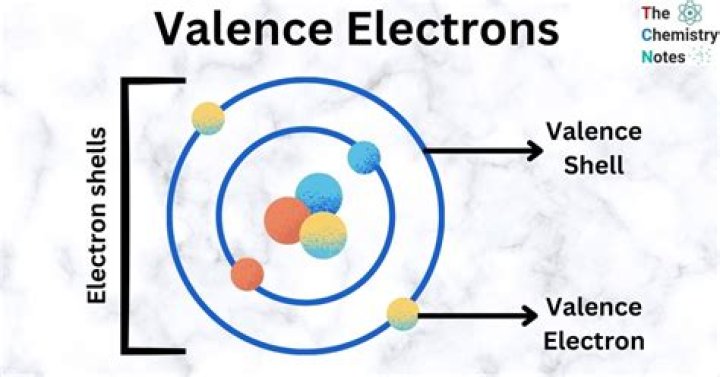
Electric charges are responsible for all electrical phenomena. Every substance is made up of tiny particles called atoms. Atoms are made up of protons, electrons, and neutrons. The attraction between protons and electrons holds particles together.What is electricity Wiki?
Electricity is the presence and flow of electric charge (electrons) in one direction. Transmission of electrical energy can occur naturally (as in lightning), or be produced (as in a generator). It is a form of energy which we use to power machines and electrical devices.Which is more dangerous AC or DC?
AC is more serial killer as AC with less frequency (50 Hz in EU and 60 Hz in US) is more dangerous than the DC having the same level of voltage. In other words, 230V AC (or 120V AC) is more dangerous than 230V DC or 120V DC respectively.What is current and voltage?
Current is the rate at which electric charge flows past a point in a circuit. In other words, current is the rate of flow of electric charge. Voltage, also called electromotive force, is the potential difference in charge between two points in an electrical field. Voltage is the cause and current is its effect.What are the 3 forms of Ohm's law?
Ohm's law- Alternating current.
- Capacitance.
- Direct current.
- Electric current.
- Electric potential.
- Electromotive force.
- Impedance.
- Inductance.